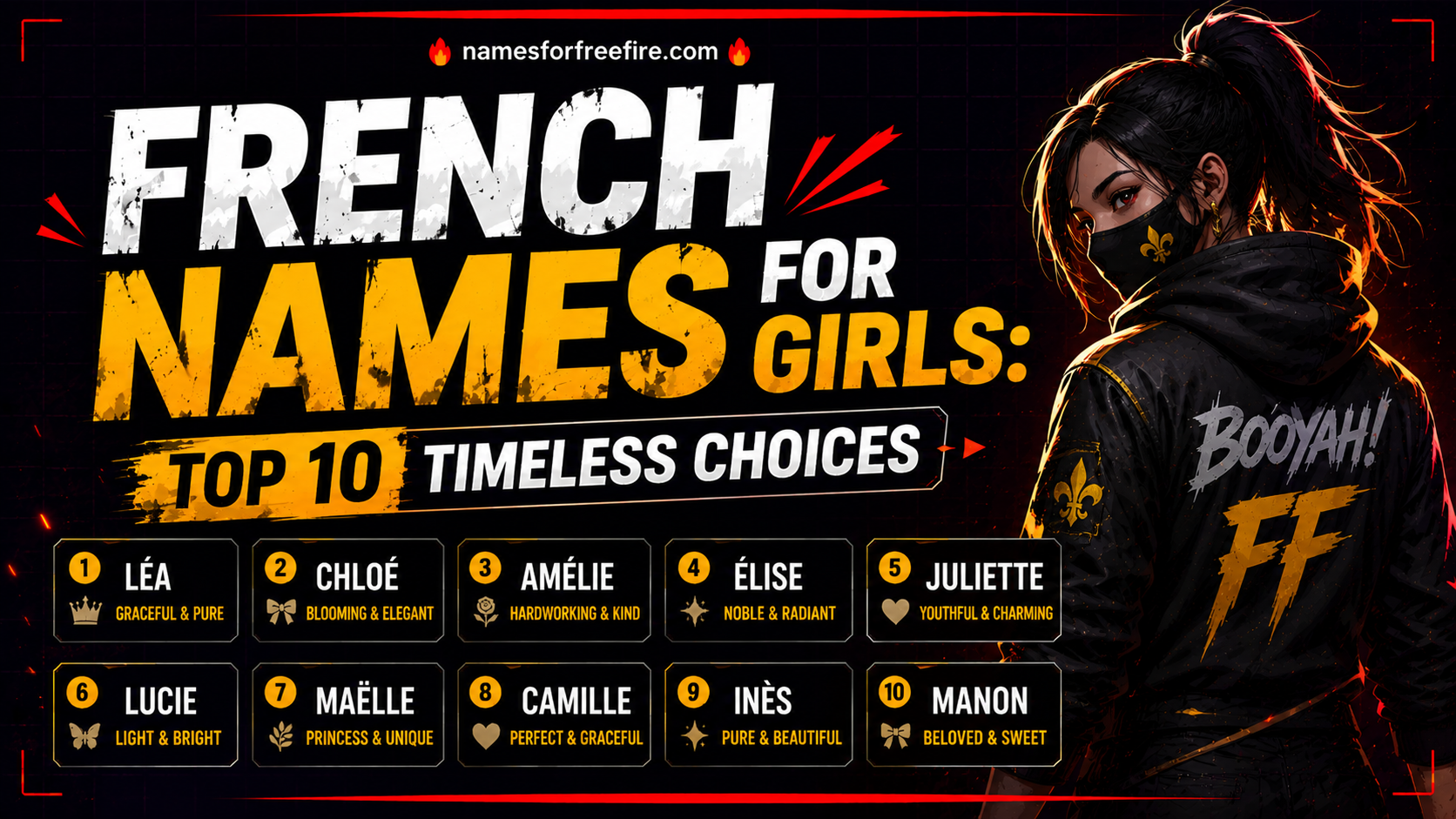
Every parent wants a name that still sounds beautiful twenty years later. Not trendy for one season and forgotten the next, something that actually lasts. That is exactly what French names for girls deliver. They have a natural elegance to them, a softness in how they sound, and a weight that comes from centuries of use. Whether you have French roots or simply love how the language feels, these names carry something that generic popular names just do not.
This list covers the top 10 timeless picks, what each name means, why it has lasted this long, and what kind of personality it tends to suit. No filler, no padding, just ten names worth seriously considering.
Why French Names for Girls Have Never Gone Out of Style
Before getting into the list, it is worth understanding why these names keep coming back generation after generation.
French names tend to be short and melodic. Most of them are two or three syllables at most, which means they pair well with almost any surname and are easy to say in any language. They also carry strong meanings; many come from Latin or Old German roots filtered through centuries of French use, giving them a depth that newer invented names simply do not have.
Parents around the world choose French names for girls, not just for the sound but for what the names represent. Confidence. Elegance. A quiet kind of strength. These are not names that need to be shouted to get attention.
1. Charlotte: The Name That Refuses to Age
Charlotte has been in the top name lists across France, the US, the UK, and Australia for years, and it keeps holding its position without feeling tired.
It means "free woman" or "petite and feminine", derived from the male name Charles. What makes Charlotte work across generations is that it suits every stage of life equally. It sounds right on a baby, works perfectly in a professional setting, and never feels out of place anywhere in between.
Royal families across Europe have used it repeatedly, which adds a layer of familiarity without making it feel pretentious.
2. Margot: Short, Sharp, and Completely Timeless
Margot is having a significant moment right now, but the truth is, it has never really gone away. It is a French variation of Margaret, meaning "pearl", and it carries a quiet confidence that a lot of parents are drawn to.
What makes Margot stand out among French names is how clean it looks written down and how naturally it rolls off the tongue in any language. No complicated pronunciation rules, no accent marks to worry about. Just a strong, elegant two-syllable name that works everywhere.
3. Éloise: Soft Sound, Strong History
Éloise (also spelt Eloïse) has been climbing steadily in popularity outside France for a few years now. It means "healthy" or "wide" in Old German, but its real appeal has nothing to do with the literal translation.
The name simply sounds beautiful. The combination of the soft É, the flowing middle, and the quiet ending gives it a quality that is hard to define but immediately recognizable. Parents who want something elegant without being overly formal tend to land here.
It also connects to one of history's most famous love stories, Héloïse and Abélard, which gives it a romantic weight without being dramatic.
4. Camille: Works for Any Personality
Camille is one of those rare names that suits wildly different personalities equally well. Quiet and artistic? It works. Confident and outgoing? Still works. There is something neutral in the best possible sense about how it sits.
It means "helper to the priest" in its Latin roots, but nobody uses it for that reason. People use it because it sounds effortlessly French, pairs with almost any surname, and has been consistently popular in France itself for decades without ever becoming oversaturated globally.
5. Juliette: Romance Without the Drama
Shakespeare made Juliet famous, but the French spelling Juliette adds something the English version does not quite have. That extra syllable changes the rhythm and gives it a softer, more poetic quality.
It means "youthful" and comes from the Roman family name Julius. As a French nickname for girls, it ranks consistently well in France and has grown significantly in the English-speaking world over the past decade.
If you want something romantic and recognizable without being ordinary, Juliette sits in a very comfortable spot.
6. Clémence: Underused and Genuinely Beautiful
This one deserves far more attention than it gets outside France. Clémence means "mercy" or "mildness" and has been a steady presence in French naming charts for generations.
It is rare enough globally that your daughter is unlikely to share it with three classmates, but established enough in France that nobody will find it unusual or hard to place. That balance, familiar in its origin, fresh in wider use, is exactly what a lot of parents are looking for.
7. Louise: The Classic That Never Left
Louise has been in France's top baby names for most of the last century, and for good reason. It means "renowned warrior", which sounds surprisingly bold for a name that feels so soft, and it carries a straightforward elegance that never dates.
It works brilliantly as both a first name and a middle name, which is partly why it has stayed so consistently popular. As a first name, it is confident and complete. As a middle name, it smooths out almost any combination.
8. Anaïs: For Parents Who Want Something Genuinely Distinctive
Anaïs (pronounced ah-nah-EES) is the name on this list most likely to turn heads in a good way. It is recognisably French, has a beautiful sound, but sits just outside the mainstream globally, ranked around 91 in France, which means it is appreciated without being everywhere.
It is considered a variant of Anna or Hannah, meaning "grace." But as a timeless French name for girls, its appeal comes more from how it sounds than what it means. Soft, unusual, and completely its own thing.
9. Adèle: Three Letters Have Never Felt So Complete
Adèle means "noble" and has been a constant in French naming history. Short, strong, and impossible to shorten further, it is the kind of name that stands completely on its own without needing a nickname.
The accent over the first E gives it a visual distinctiveness that makes it look elegant on paper as well as sound good when spoken. If you want something brief that still carries weight, Adèle is difficult to beat.
10. Vivienne: The Most Underrated Name on This List
Vivienne means "alive" and comes from the Latin Vivianus. It is longer than most names on this list, four syllables, but it never feels heavy. It flows naturally and shortens easily to Viv or Vivie for everyday use.
What makes it timeless is that combination of old-world charm and modern usability. It does not feel like a name from a specific decade. It feels like a name that belongs to no particular time at all, which is exactly the definition of timeless.
How to Pick the Right French Name for Your Daughter
Ten names is still a long list when you are trying to make a real decision. A few things worth thinking through:
Say it out loud with your surname. Some combinations work better than others. Juliette flows differently depending on what follows it.
Think about nicknames. Vivienne becomes Viv. Clémence is harder to shorten naturally. If you want built-in nickname options, factor that in.
Consider how it travels. If your family moves between countries or languages, some names carry better than others. Charlotte and Camille are genuinely universal. Clémence and Anaïs require a little more explanation outside French-speaking regions, but that is not necessarily a problem.
If you are looking to explore even more naming ideas and want to see how French names look styled for gaming profiles, creative projects, or personalised name art, Nom Free Fire on the site lets you play with fonts, styles, and symbol combinations for any name on this list.
Final Thoughts
The reason French names for girls have stayed relevant across centuries, across countries, and across completely different cultural moments is simple: they are genuinely good names. Not trend-chasing, not invented, not built around a moment that will pass. Each one on this list has been carried by real people across real generations and has come out the other side still sounding as good as it did at the start.
Whichever one you choose, it will still suit her at five, at twenty-five, and at sixty. That is the whole point.
FAQs
What are the most popular French names for girls right now?
Louise, Emma, Jade, Charlotte, and Camille consistently rank at the top in France. Globally, Charlotte and Éloise have seen the biggest growth in English-speaking countries over the past few years.
Are French names hard to pronounce in English?
Most are not. Names like 'Charlotte', 'Margot', 'Camille', and 'Louise' do not confuse at all. A few, like Anaïs and Clémence, need a quick pronunciation guide for non-French speakers, but both become natural quickly.
What does the most popular French girl's name mean?
Louise, which has held the top spot in France for several years, means "renowned warrior". It comes from the Old High German name Hluodowig, filtered through centuries of French use.
Can I use a French name if I have no French background?
Absolutely. French names have been used worldwide for centuries; they are now part of the global naming tradition. Charlotte is the second most popular name in the US, and most people who use it have no French heritage at all.
What French girl name is the most timeless?
That depends on what 'timeless' means to you. If it means consistent cross-generational appeal, Louise wins. If it means elegant and never overdone, Clémence or Vivienne. If it means globally recognised and still fresh, Charlotte.